If you own or operate a construction supply outlet, you may be eligible to supply ICCONS range of construction fastening supplies at wholesale prices!
Dealer Login
Blind Rivets & Rivet Tools: The Complete Guide to Choosing the Right Rivet
04 November 2026
On this page
Blind Rivets & Rivet Tools: The Complete Guide to Choosing the Right Rivet
From metal roofing and sheet metal fabrication to automotive manufacturing and general construction, blind rivets, sometimes known as pop rivets, provide a fast, reliable and cost-effective fastening solution.
Unlike traditional bolts and nuts, blind rivets can be installed from one side of the material, making them ideal for applications where access to the rear of the connection is restricted.
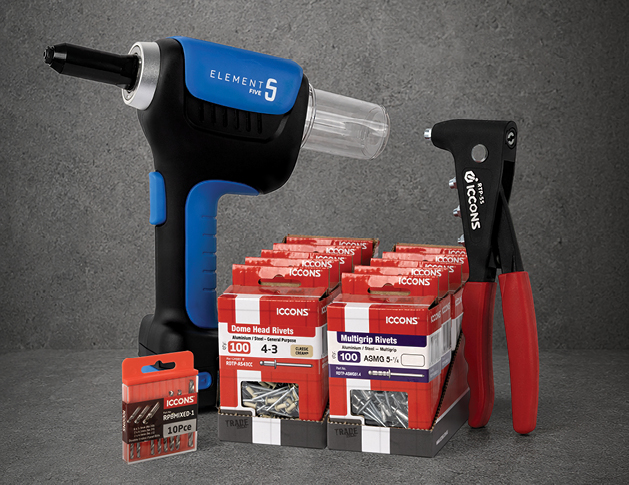
At ICCONS, we offer an extensive range of rivets, including dome head rivets, countersunk rivets, multi-grip rivets, large flange rivets, sealed blind rivets and painted rivets, alongside professional manual and cordless rivet tools.
With a variety of head styles, materials and grip ranges available, understanding which rivet to use can make a significant difference to installation efficiency, connection strength and long-term performance.
What Is a Blind Rivet and How Does It Work?
A blind rivet is a permanent mechanical fastener designed to join two or more pieces of material together without requiring access to both sides of the connection.
A typical blind rivet consists of two main components:
Rivet Body: A hollow metal sleeve that expands and deforms during installation to secure the materials together.
Mandrel (Pin): A metal pin running through the rivet body that is pulled by the installation tool to form the connection.
During installation, the rivet is inserted into a pre-drilled hole. A manual or powered rivet tool pulls the mandrel through the body, causing the rivet to deform and clamp the materials together.
Once the required setting force is reached, the mandrel breaks at its designed break point, leaving a permanent mechanical fixing.
This simple installation process makes blind rivets particularly useful for sheet metal, roofing, fabrication and assembly applications where speed and accessibility are important.
Why Choose Blind Rivets?
Blind rivets offer several advantages over traditional fastening methods, particularly when working with thin materials or where access is limited.
Key Benefits of Blind Rivets
- One-Sided Installation: No access to the rear of the material is required, making blind rivets ideal for enclosed sections and difficult-to-reach connections.
- Fast and Easy Installation: Rivets can be installed quickly using manual, pneumatic or cordless rivet tools.
- Permanent Mechanical Fixing: Once installed, the rivet forms a secure connection without requiring a separate nut or washer.
- Versatile Material Options: Available in aluminium, steel, stainless steel and mixed-material combinations.
- Wide Range of Applications: Suitable for joining sheet metal, steel, aluminium, plastics, composites and other compatible materials.
- Cost-Effective Fastening: Simple installation and minimal tooling requirements make rivets a practical option for repetitive fastening tasks.
For contractors, manufacturers and fabricators, choosing the correct blind rivet can help improve productivity while delivering consistent fastening performance.
Types of Blind Rivets: Which Rivet Should You Use?
Not all blind rivets are designed for the same application. The head style, body material and grip range all influence how the rivet performs once installed.
Our ICCONS rivet range includes several options to suit different installation requirements.
1. Dome Head Rivets
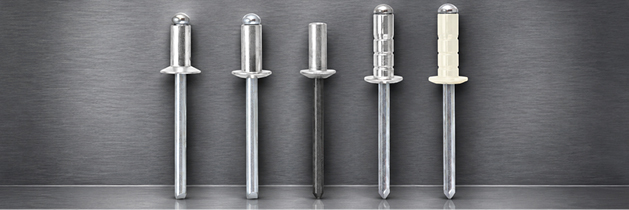
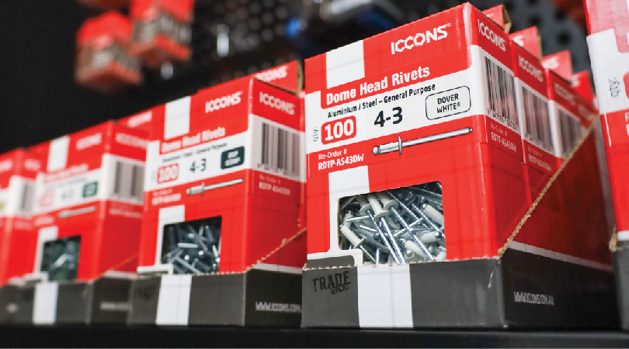
Dome head rivets are among the most commonly used blind rivets, featuring a rounded, low-profile head that sits above the material surface.
Their versatile design makes them suitable for general-purpose fastening across construction, manufacturing and sheet metal applications.
Common applications include:
- Metal roofing and cladding
- Gutters and downpipes
- Sheet metal fabrication
- General manufacturing and assembly
- Automotive components and repairs
Our ICCONS dome head rivets are available in a range of material combinations, including aluminium/aluminium, aluminium/steel, steel/steel and stainless steel/stainless steel.
2. Countersunk Head Rivets
Countersunk rivets are designed for applications where a flush or near-flush finish is required.
Unlike dome head rivets, countersunk rivets sit within a correctly prepared countersunk hole, reducing the amount of the fastener head protruding above the material surface.
They are particularly useful where appearance, clearance or a smooth finished surface is important.
Common applications include:
- Sheet metal fabrication
- Equipment and machinery assembly
- Metal panels and enclosures
- Applications requiring a flush finish
ICCONS countersunk rivet range includes aluminium/aluminium, aluminium/steel and stainless steel/stainless steel options.
3. Multi-Grip Rivets
Multi-grip rivets are designed to accommodate a wider range of material thicknesses compared with standard blind rivets.
Their extended grip range allows one rivet size to suit several different material thicknesses, helping reduce the number of individual rivet sizes required on site or in the workshop.
ICCONS aluminium/steel multi-grip rivets can replace up to three conventional rivet sizes in suitable applications.
Key benefits include:
- Wider grip range for varying material thicknesses
- Reduced inventory requirements
- Greater flexibility during installation
- Suitable for manufacturing, maintenance and assembly work
- Multi-grip rivets are particularly useful for fabricators and installers working with different material thicknesses throughout a project.
4. Sealed Blind Rivets
Sealed blind rivets are designed for applications where restricting the passage of moisture or air through the fixing is important.
Unlike standard open-end blind rivets, sealed rivets feature a closed-end body designed to create a more secure barrier through the rivet itself.
Common applications include:
- Water tanks
- Ducting
- Boat manufacturing
- Sheet metal enclosures
- Applications requiring a watertight or airtight fixing
ICCONS aluminium/steel sealed rivets provide an option for these applications. The overall joint design and sealing requirements should still be considered when selecting the appropriate fixing.
5. Large Flange Rivets
Large flange rivets feature an oversized head that provides a greater bearing surface against the material being fastened.
This wider head helps distribute clamping forces over a larger area, making them useful when working with softer, thinner or more delicate materials.
Typical applications include:
- Thin sheet metal
- Plastic panels
- Signage
- Lightweight fabrication
- Materials requiring a larger bearing surface
Choosing the Right Rivet Material
Selecting the correct rivet material is just as important as choosing the head style.
Different materials offer varying levels of strength, corrosion resistance and suitability for different environments.
| Rivet Material | Key Characteristics | Common Applications |
| Aluminium/Aluminium | Lightweight and corrosion resistant | General sheet metal, gutters and lightweight fabrication |
| Aluminium/Steel | Aluminium body with steel mandrel | General construction, roofing and assembly |
| Steel/Steel | Strong steel construction | Steel fabrication, framing and manufacturing |
| Stainless Steel/Stainless Steel | Enhanced corrosion resistance | Exposed environments, marine-related and demanding applications |
| Aluminium/Steel Multi-Grip | Extended grip range | Variable material thicknesses and general fabrication |
| Aluminium/Steel Sealed | Closed-end body | Ducting, water tanks and moisture-sensitive applications |
When selecting a rivet, consider the materials being joined, expected loads, environmental exposure and potential galvanic corrosion between dissimilar metals. The correct rivet body diameter, length and grip range must also be selected to achieve a secure and reliable connection.
Manual vs Cordless Rivet Tools: Which Is Better?
Choosing the correct rivet tool can significantly influence installation efficiency, particularly when completing repetitive fastening tasks.
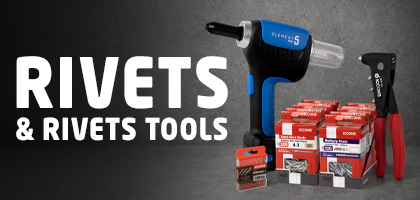
At ICCONS, we offer professional manual and cordless blind rivet tools to suit different applications and workloads.
Manual Rivet Tools
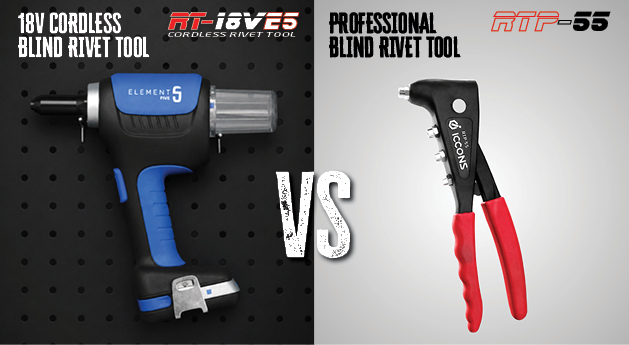
Manual rivet tools use hand-operated leverage to pull the rivet mandrel and form the connection.They are a practical, economical solution for smaller jobs, occasional riveting and general maintenance.
Our ICCONS Professional Blind Rivet Tool (RTP-55) features:
- Ergonomic one-hand grip design
- Forged steel handle
- Durable steel jaw housing
- Four interchangeable nose pieces
- Simple maintenance and jaw replacement
- Spring design that helps retain the rivet during positioning
The RTP-55 accommodates aluminium, steel and stainless steel rivets within its specified capacity, making it suitable for roofing, plumbing, assembly and general fabrication.
Cordless Rivet Tool
For larger projects and repetitive installations, cordless rivet tools offer a powered alternative to manual tools.
Our ELEMENT 5 18V (RT-18VE5) Cordless Blind Rivet Tool is designed to reduce manual effort and improve productivity across manufacturing, roofing and assembly applications.
Key features include:
- 18V cordless operation
- 12,000N of traction power (highest in its class)
- 21 mm stroke length
- Integrated mandrel collector
- Two 2.0 Ah Lithium-ion batteries
- Battery charge indicator
- Belt clip suitable for both left- and right-handed operators
- 3 x L.E.D lights to light up work surface
- Ergonomic soft-grip design
- Lightweight
- Robust carry case
- 1 year warranty
The ELEMENT 5 supports aluminium, steel and stainless steel blind rivets within its specified tool capacity.
For contractors and manufacturers completing large numbers of rivet installations, a cordless rivet tool can help reduce operator fatigue and improve workflow efficiency.
Manual vs Cordless Rivet Tool Comparison
| Feature Manual | Rivet Tool | Cordless Rivet Tool |
| Power source | Hand operated | Rechargeable battery |
| Best suited for | Occasional and smaller jobs | Repetitive and higher-volume work |
| Installation effort | Requires manual force | Powered pulling mechanism |
| Portability | Lightweight, no battery required | Portable and cordless |
| Productivity | Practical for smaller quantities | Efficient for repetitive installations |
| Maintenance | Simple mechanical components | Requires battery charging and tool maintenance |
Both tools can produce reliable, riveted connections when correctly matched to the rivet type, size and material.
How to Install a Blind Rivet
Installing a blind rivet is straightforward when the correct rivet size and installation tool are used.
Step 1: Select the Correct Rivet
Choose a rivet with the appropriate body diameter, length, grip range, material and head style for the application.
Step 2: Drill the Hole
Drill a hole through the materials being joined using the diameter specified for the selected rivet.
The hole should allow the rivet body to fit correctly without excessive clearance.
Step 3: Insert the Rivet
Position the rivet body through the prepared hole, ensuring the rivet head sits correctly against the material surface.
Step 4: Position the Rivet Tool
Insert the mandrel into the appropriate nosepiece of the manual or cordless rivet tool.
Ensure the tool is aligned correctly with the rivet.
Step 5: Set the Rivet
Operate the tool to pull the mandrel through the rivet body.
As the mandrel is pulled, the rivet body expands and clamps the materials together.
Continue until the mandrel breaks at its designed break point.
Step 6: Inspect the Connection
Check that the rivet is correctly seated, the materials are securely joined and the mandrel has broken as intended.
For repetitive installation work, using the correct tool and nosepiece helps achieve consistent results.
Common Applications for Blind Rivets
Blind rivets are used across a wide range of construction, manufacturing and maintenance applications.
Their ability to form a permanent mechanical connection from one side makes them particularly useful when access is restricted.
Common applications include:
- Roofing and Cladding: Fixing compatible metal roofing components, flashings, gutters and downpipes.
- Sheet Metal Fabrication: Joining metal panels, enclosures and fabricated components.
- Automotive Manufacturing: Assembly and repair of vehicle panels and components.
- Marine Applications: Boat manufacturing and repairs using appropriately selected corrosion-resistant rivets.
- HVAC and Ducting: Joining ductwork, sheet metal fittings and ventilation components.
- General Construction: Fastening compatible metal, plastic and composite materials.
- Manufacturing and Assembly: Permanent fastening for machinery, equipment and fabricated products.
For each application, selecting the correct rivet material, head style and grip range is essential for long-term performance.
Choosing the Right Rivet for Your Application
With so many blind rivet types available, selecting the correct fixing depends on several key factors.
- Material Compatibility: Consider the materials being joined and whether the rivet needs additional corrosion resistance.
- Head Style: Choose dome head rivets for general applications, countersunk rivets for flush finishes, or large flange rivets where a wider bearing surface is beneficial.
- Grip Range: Ensure the selected rivet can accommodate the combined thickness of the materials being joined. Multi-grip rivets may offer greater flexibility where material thickness varies.
- Environmental Conditions: Stainless steel or other appropriately selected corrosion-resistant rivets may be required for exposed or demanding environments.
- Installation Equipment: Confirm the selected manual or cordless rivet tool is compatible with the rivet diameter and material.
- Understanding these requirements helps ensure the correct blind rivet is selected for a secure, durable and efficient installation.
Why Choose ICCONS Rivets and Rivet Tools?
At ICCONS, we supply a comprehensive range of blind rivets and professional rivet tools to support the needs of roofers, plumbers, fabricators, manufacturers and general construction trades.
Our range includes:
- Dome head, countersunk and large flange blind rivets
- Multi-grip rivets for varying material thicknesses
- Sealed blind rivets for applications requiring moisture resistance
- Aluminium, steel and stainless steel material options
- Painted rivets for colour-matched applications
- Professional Manual Blind Rivet Tool and Cordless Element 18V Rivet Tool Rivet Tools
Whether you're completing general sheet metal fabrication, installing roofing components or working on repetitive manufacturing applications, our range provides fastening options to suit different materials and installation requirements.
Takeaways and Key Benefits
ICCONS blind rivets and rivet tools provide a fast, reliable and cost-effective solution for joining sheet metal, steel, aluminium and other compatible materials. With dome head, countersunk, multi-grip, sealed and large flange rivets available in a variety of materials, our range supports roofing, fabrication, manufacturing and general construction applications. Combined with our professional manual and cordless rivet tools, ICCONS offers versatile fastening solutions for efficient one-sided installation.
Frequently Asked Questions
What is the difference between a blind rivet and a pop rivet?
A blind rivet and a pop rivet generally refer to the same type of fastener. Both are installed from one side of the material using a rivet tool that pulls the mandrel through the rivet body to create a permanent mechanical connection.
What is the difference between dome head and countersunk rivets?
Dome head rivets feature a rounded head that remains visible above the material surface and are commonly used for general-purpose fastening. Countersunk rivets are designed to sit flush or nearly flush with the surface when installed into a correctly prepared countersunk hole.
When should I use a multi-grip rivet?
Multi-grip rivets are ideal when joining materials of varying thicknesses. Their wider grip range allows one rivet size to accommodate several material thicknesses, helping reduce the number of different rivet sizes required for a project.
Are stainless steel rivets better than aluminium rivets?
Stainless steel rivets generally offer greater strength and corrosion resistance in demanding environments, while aluminium rivets are lightweight and suitable for many general-purpose applications. The best choice depends on the materials being joined, environmental exposure and required connection strength.
What is the difference between a sealed rivet and a standard blind rivet?
A standard open-end blind rivet has an open body construction, while a sealed blind rivet features a closed-end body designed to restrict moisture or air passing through the fixing. Sealed rivets are commonly used in ducting, tanks and other applications where a more secure and sealed barrier through the rivet itself is important.
Can I use a cordless rivet tool instead of a manual rivet tool?
Yes. A cordless rivet tool can be used instead of a manual tool when it is compatible with the selected rivet diameter and material. Cordless rivet tools are particularly useful for repetitive installations, reducing manual effort and improving productivity.
What size drill bit should I use for a blind rivet?
The required drill bit depends on the rivet body diameter and manufacturer's specifications. The drilled hole should provide the correct clearance for the rivet body without excessive movement. Always refer to the rivet's technical data before installation.
| Rivet Series | Rivet Diameter | Drill Bit Size |
| 4 Series | 3.2mm | 3.3mm (No. 30) |
| 5 Series | 4.0mm | 4.1mm (No. 20) |
| 6 Series | 4.8mm | 4.9mm (No. 11) |
| 8 Series | 6.4mm | 6.4mm |
What materials can blind rivets join?
Blind rivets can join compatible metals, plastics, composites and some timber-based materials. They are commonly used for sheet metal, aluminium panels, roofing components, ductwork and manufactured assemblies. The rivet type and size should be selected to suit the materials and expected loads.
Explore Our ICCONS Rivets and Rivet Tools
From general-purpose blind rivets to multi-grip and sealed fastening solutions, our extensive range is designed to support a variety of construction and manufacturing applications.
Need help selecting the right rivet or installation tool for your application? Contact our Technical Sales Team for expert advice and product recommendations. Alternatively, find your nearest ICCONS stockist using our "Find a Dealer" feature.
Latest articles
-
 4 November 2026
Blind Rivets & Rivet Tools: The Complete Guide to Choosing the Right Rivet
Discover ICCONS comprehensive range of blind rivets and rivet tools, including dome head, countersunk, multi-grip, sealed rivets and painted rivets. Learn how rivets work, which materials and head styles suit different applications, and how to choose between manual and cordless rivet tools for fast, reliable fastening.
Read More -
 29 September 2026
What's New 🔥ICCONS UNI-BOLT™, The Compliant Solution for Hollow Section Steel Connections with limited access
Introducing UNI-BOLT™, the blind fastener designed to create a powerful geometric interlock inside hollow steel sections with limited access.
Read More -
 24 March 2026
What’s New 🔥THRU-BOLT™ ULTRA, The Newest Certified Mechanical Expansion Anchor with extreme tensile strength and shear load capacities
THRU-BOLT™ ULTRA is ICCONS’ new mechanical expansion anchor for medium to heavy-duty anchoring in cracked and non-cracked concrete. With variable anchorage depths, high approved tensile and shear loads, Seismic C1 and C2 performance, fire resistance, and fast installation, it is built for demanding structural and non-structural applications.
Read More